



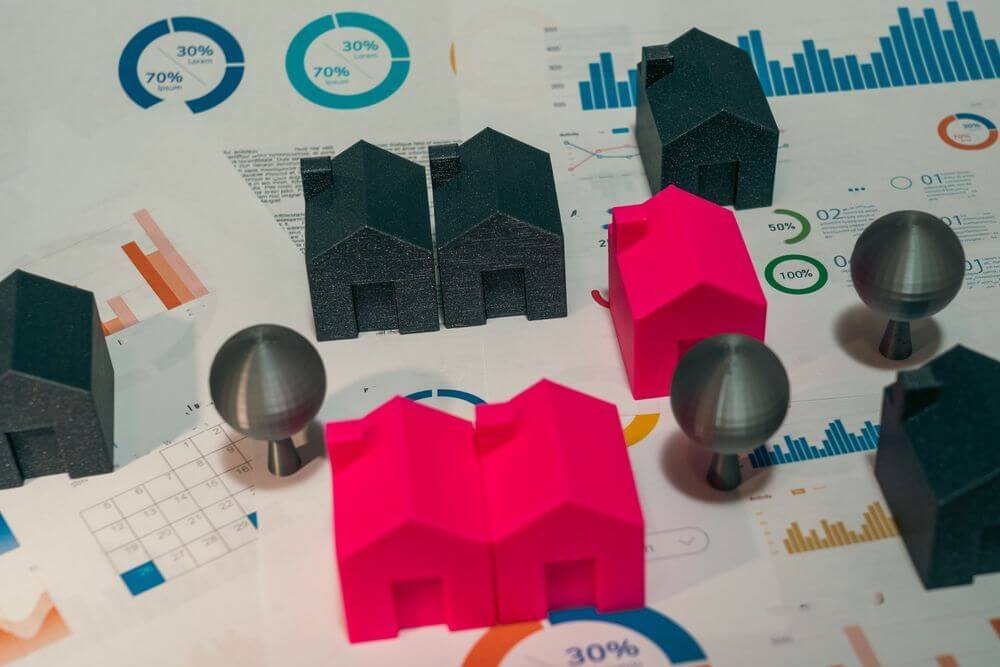
Real estate holds a culturally significant place in Australian wealth generation, offering a sense of stability that digital or equity markets sometimes lack. However, despite the cultural prominence of bricks and mortar, approximately 78 percent of households do not actually own an investment property. Of the 22 percent who do participate in the market, the vast majority struggle to build substantial scale. Recent data from the Australian Taxation Office reveals a sobering reality: approximately 71 percent of all property investors own just a single asset. Even more telling, fewer than 1 percent successfully scale their holdings to manage a portfolio of six or more properties. Bridging the gap between a single purchase and a robust, multi-property empire requires a meticulously structured, decade-long plan.
Understanding Market Fundamentals and Demographic Shifts
To build sustained wealth, investors must look beyond short-term market fluctuations and understand the structural fundamentals driving underlying capital growth. Housing demand is heavily influenced by domestic population changes, construction bottlenecks, and evolving household compositions. The Reserve Bank of Australia recently highlighted that a pandemic-driven shift in demographics has led to a sustained decline in average household size. In practical terms, reverting to historical household sizes of 2.8 people would require 1.2 million fewer dwellings today. This structural pressure is further compounded by a 40 percent surge in construction costs since 2019, according to their analysis on housing market dynamics.
Recognising these structural supply constraints is the first crucial step for beginners. For those researching how to start a property portfolio, mapping out a 10-year equity strategy that capitalises on these long-term market imbalances is far more effective than attempting to time the market for quick, speculative gains. By understanding where the demand will persistently outstrip supply, buyers can make informed, data-driven acquisitions that naturally appreciate over time.
Navigating Finance, Policy Changes, and Cash Flow
Scaling from one property to multiple assets requires careful debt management and an awareness of changing fiscal policies. The domestic lending environment has tightened significantly, as reflected by Australian Bureau of Statistics data showing a 5.3 percent drop in the number of new investor loan commitments in early 2026. This tighter credit landscape means buyers must be more strategic than ever about how they structure their loans and manage their ongoing cash reserves.
With the Australian Prudential Regulation Authority activating new debt-to-income caps, investors must map out their borrowing capacity years in advance to avoid hitting a finance ceiling prematurely. Furthermore, domestic legislative shifts are fundamentally altering long-term exit strategies. Investors scaling a portfolio over the next decade must consider several key factors:
● Tax modifications: Starting in July 2027, the standard 50 percent Capital Gains Tax discount for property investors will be replaced by a framework tied to cumulative inflation over the holding period of the asset.
● Negative gearing adjustments: Recent budget changes now quarantine rental losses on established properties purchased after May 2026, while allowing new builds to remain fully geared.
● Debt reshuffling strategies: To combat cash-flow pressures in a high-rate environment, borrowers are increasingly refinancing. Recent market data shows total loan refinances outpacing new loan issuances by more than 80,000 loans over a 12-month period.
● Foreign investment shifts: Following the tripling of foreign application fees in April 2024, established home acquisitions by foreign buyers dropped from roughly 33 percent to 22 percent of their total purchases, easing some competition for local buyers.
Committing to the Right Holding Period
A strategic acquisition plan is only as good as the investor’s ability to hold the asset through multiple market cycles. Although a decade-long investment horizon is highly recommended to maximise capital growth, historical property data shows that the median holding period for an Australian investment property is only around 8.8 years. In major markets like New South Wales, half of all purchasers offload their assets within ten years of acquisition. This highlights a significant disconnect between the intention to build wealth and the patience required to actually achieve it.
Selling prematurely means that investors exit the market just before the compound growth curve of their properties truly accelerates. Owner-occupiers typically hold their homes for over 22 years in some states, allowing them to comfortably ride out economic cycles. Investors, who are statistically far more likely to offload properties early in pursuit of short-term profits, often miss out on the most significant financial benefits of compounding equity. True wealth in property is rarely built through rapid buying and selling.
Ultimately, property ownership has the power to dramatically reshape retirement futures when investors treat their acquisitions as a lifelong business endeavour. By integrating these tangible real estate assets into a broader wealth creation strategy, ambitious buyers can build a robust financial foundation. Successful scaling is rarely accidental. It requires patience, rigorous financial modelling, and a steadfast commitment to a 10-year execution horizon.