



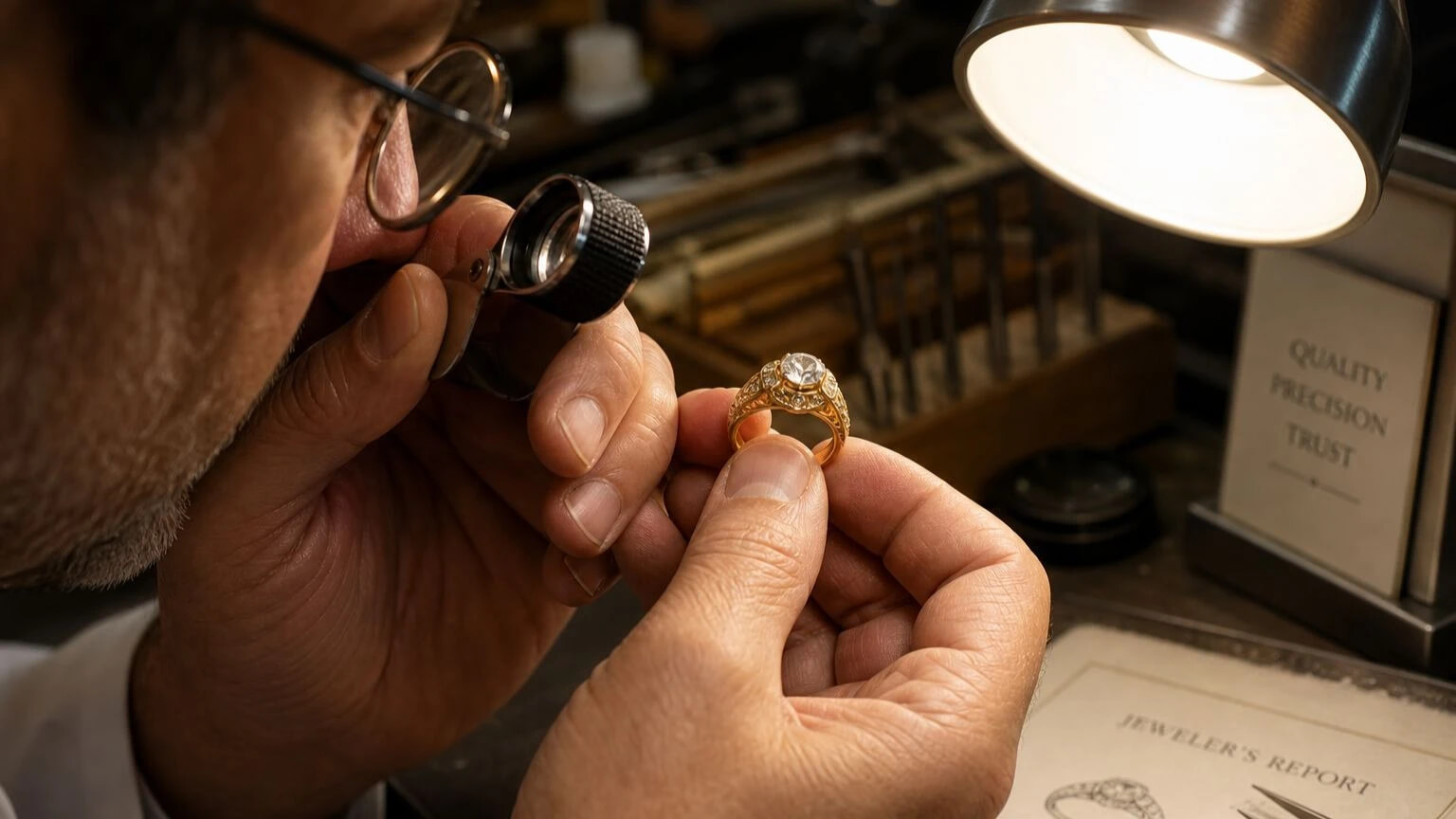
Inheriting a box of jewellery usually brings a mix of sentiment and confusion. You end up with items you will probably never wear. Heavy gold chains from the eighties, rings with outdated settings, or bracelets with broken clasps just sit in a safe. Eventually, keeping them in a drawer feels like an unnecessary security risk rather than a meaningful tribute. Turning these pieces into cash is a sensible move, but the secondary market for fine jewellery is completely opaque to outsiders. You are walking into a transaction where the buyer understands the exact margins, and you probably do not.
Valuations Versus Actual Cash Value
The biggest shock for anyone offloading estate pieces is the massive gap between an insurance valuation and the cash offer on the table. Retail replacement documents factor in modern craftsmanship, retail store markup, taxes, and brand premiums. Secondary market buyers look at these pieces very differently. They only care about raw materials or immediate resale potential. If a piece is out of style, its intricate design means absolutely nothing. It is just going to the refinery to be melted down.
When sorting items at home, separate big brands from generic ones. Pieces from names like Cartier or Tiffany are worth much more than their weight in metal. Most other items will likely be priced as scrap based on their material. Knowing this early helps you stay realistic when a dealer weighs a vintage piece.
Testing and Weighing Realities
You need to know exactly what you are holding before you step foot in a shop. Look for hallmarks with a magnifying glass. In Australia, you will commonly see stamps like 375 for 9-carat, 585 for 14-carat, or 750 for 18-carat gold. Sort the items by these purities before you leave the house. Dealers test and weigh different carats separately because the gold content dictates the payout.
When you hand over your items, the dealer will likely use an acid test or an XRF scanner. Acid testing involves rubbing the metal on a stone and applying different nitric acid solutions to see how the residue reacts. It is standard practice but leaves a tiny mark. If you are selling scrap, this does not matter at all. XRF scanners are non-destructive machines that instantly read the exact metallic composition of the piece. They are expensive units, so buyers who use them usually process a high volume of precious metals and take their operations seriously.
Weighing is where some of the simplest mistakes happen. Kitchen scales are completely useless for this job. If you want a rough baseline, buy cheap digital pocket scales. Remember that buyers deduct the weight of any stones or non-precious metals before calculating the offer. Steel springs inside necklace clasps or dirt trapped inside hollow bangles will be subtracted from the final weight.
Finding the Right Buyer
There are several tiers of buyers in the secondary market. Local jewellers, dedicated precious metal dealers, and pawnbrokers all operate on entirely different business models. Pawnbrokers need high margins to cover their storefront overheads and the inherent risk of holding dead stock. Precious metal buyers operate on volume and usually offer a percentage much closer to the daily spot price.
Location also plays a massive role in the offers you get. If you decide to sell gold on the Gold Coast, you have access to a tight cluster of competing dealers. You can easily get three quotes in a single afternoon and leverage them against each other. In regional towns, your options are heavily limited, and local buyers know they have a captive audience. If you live outside a major city, you might have to look into secure postal refining services to get a competitive rate.
Dealing with Diamonds and Gemstones
Scrap gold is easy to price because the daily spot rate is public financial information. Gemstones operate in a completely different market. Most inherited rings feature diamonds that are either too small to be worth extracting or of a clarity grade that does not meet modern consumer standards.
If you have a piece with a single diamond over half a carat, it requires a specialized appraisal. Scrap gold buyers will severely undervalue large stones because they do not have the retail network to resell them. For significant diamonds or high-end coloured stones like sapphires and rubies, you are better off approaching an estate jeweller or an auction house. They maintain a specific client base looking for vintage pieces and will assess the item as wearable jewellery rather than raw material. If a scrap buyer tells you a large, clean diamond has no resale value, pack up your items and look elsewhere.
The Negotiation Process
Treat the first price a dealer gives you as an opening bid. The secondary precious metals market is heavily negotiable. Before you walk in, check the current Australian Dollar gold spot price. Gold is traded in troy ounces, which equals roughly 31.1 grams. Take the AUD spot price, divide it by 31.1 to get the price per gram of pure 24-carat gold, and then multiply that by the purity percentage of your item. A 9-carat piece is 37.5 percent pure gold. Knowing this basic math gives you serious leverage.
You will never get full spot price because the dealer has to pay for refining and make a profit. Getting somewhere between 70 and 80 percent of the melt value for scrap is a very standard benchmark.
Do not let anyone rush you during the appraisal. A common tactic is putting the cash physically on the counter while they are still talking. It is a basic visual pressure tactic designed to make you agree quickly. If you feel uneasy about the transaction or the dealer refuses to explain their math, simply pick up your items and leave. The metal will still be worth money tomorrow.
Taxes and Record Keeping
Selling personal inherited assets rarely triggers capital gains tax for the average person in Australia unless the items were originally purchased strictly for investment purposes or exceed specific threshold values. Keep a record of the transaction anyway.
If you are unsure of your tax obligations or dealing with high-value items, consulting a tax agent online can provide personalized advice on capital gains and accurate record keeping.
Legitimate buyers will require an Australian driver’s license or passport and will log the details of the pieces you are selling into a police database. This is a basic legal requirement across the states to prevent the fencing of stolen goods. If a buyer offers you a slightly higher rate for a cash deal with no paperwork, walk away immediately. The risk of getting caught up in questionable business practices is never worth an extra fifty dollars. Stick to established, transparent operators who follow the rules.