



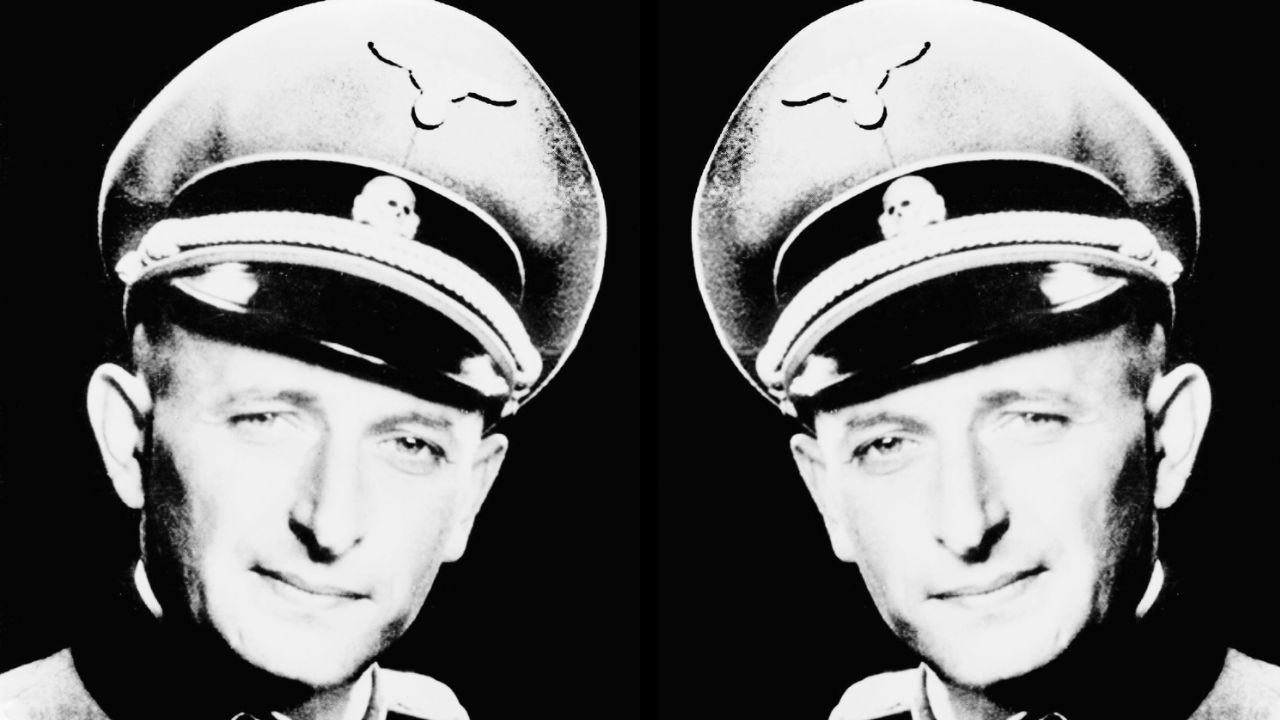
Adolf Eichmann was a high-ranking Nazi official tasked with orchestrating one of history’s darkest periods, the Holocaust. His role extended beyond mere participation; he was instrumental in ensuring the systematic extermination of Jews. This article explores Eichmann’s journey from his early years to his post-war endeavors. Understanding his actions is crucial not only to grasp the magnitude of past atrocities but also to recognize the importance of vigilance in safeguarding human rights.
Early Life and Career Beginnings
Eichmann’s story begins in Solingen, Germany, where he was born on March 19, 1906. By 1914, his family had moved to Austria, a change that would shape his academic and professional struggles. You can see how his early setbacks might have driven him towards seeking identity and purpose within political circles. Despite initial failures, Eichmann’s fortunes shifted in 1932, when he joined the Austrian Nazi Party and the SS. This move set him on a path that would ultimately make him a crucial figure within the Nazi regime.
Progression in the Nazi Hierarchy
Post-1933, with the Nazi rise to power, Eichmann relocated to Germany. He joined the Sicherheitsdienst (SD), the SS intelligence service, where he managed the Jewish affairs department. Here, his role involved strategic planning and execution of measures to force Jewish emigration. It’s important to recognize how his bureaucratic efficiency helped the Nazis achieve their sinister goals. This institutional proficiency gave Eichmann the leverage to execute tasks that would later prove catastrophic for millions.
Key Roles in Nazi Administration
Eichmann’s expertise became more pronounced after the Anschluss, the annexation of Austria in 1938. You can see how he skillfully leveraged his position to establish the Central Agency for Jewish Emigration in Vienna. By May 1939, almost 100,000 Jews had been forced to emigrate under Eichmann’s directives. He moved on to set similar agencies in Prague and Berlin, where his efforts were instrumental in the further escalation of forced emigration. Him supervising such operations is a stark reminder of his administrative prowess in executing the Nazi agenda.
Involvement in the Holocaust
Eichmann’s logistical skills were paramount during the Holocaust. He attended the infamous Wannsee Conference on January 20, 1942, where plans for the Final Solution were solidified. Here, he managed the complex details required for genocide. His position as head of RSHA section IV B 4 meant overseeing deportations to extermination camps such as Auschwitz and Treblinka. This involved orchestrating large-scale operations, such as the deportation of Hungarian Jews in 1944. That way, Eichmann played a critical part in moving Nazi strategies from forced emigration to outright extermination.
Activities Post World War II
With the war ending, Eichmann fled to Argentina, adopting various aliases to conceal his identity. He lived under the radar for years, working in anonymity while boasting of his wartime actions among former Nazis. Understanding how he evaded justice for so long underlines the importance of international cooperation in capturing war criminals. Despite the years of living a secret life, Eichmann’s past eventually caught up with him.
Trial and Conviction
Israeli Mossad agents captured Eichmann in Buenos Aires on May 11, 1960. This marked the beginning of a historic journey towards justice. Extradited to Israel, he faced trial in Jerusalem in 1961. The proceedings were exhaustive, covering charges of war crimes and crimes against humanity. Eichmann’s defense of merely following orders did not absolve him. It’s crucial to note that his conviction and subsequent execution in 1962 remain Israel’s only capital punishment case, emphasizing the severity of his crimes and its impact on international law and human rights.
Family Life and Legacy
While Eichmann was a significant figure in the Nazi machinery, his life also included familial aspects. He had a family, including four sons, with little detail known beyond this. His role as an efficient facilitator, rather than a top decision-maker, showcases the sheer influence of diligent execution within bureaucratic structures. Eichmann’s legacy serves as a potent reminder of the dangers posed by blind adherence to orders and the critical need for ethical governance and accountability in leadership.
Conclusion
Reflecting on Eichmann’s life implores us to consider the historical implications of his actions. It’s important to recognize the catastrophic human cost of organizational complicity in atrocities. By studying figures like Eichmann, we remain vigilant against the emergence of future threats to human rights. To prevent such events from recurring, we must prioritize justice and responsibility in all societal facets. For further reading on complex historical events and strategies to safeguard democracy, you might find resources like The BizLog useful. Understanding history supports a future where progress triumphs over injustice.
Also Read: